

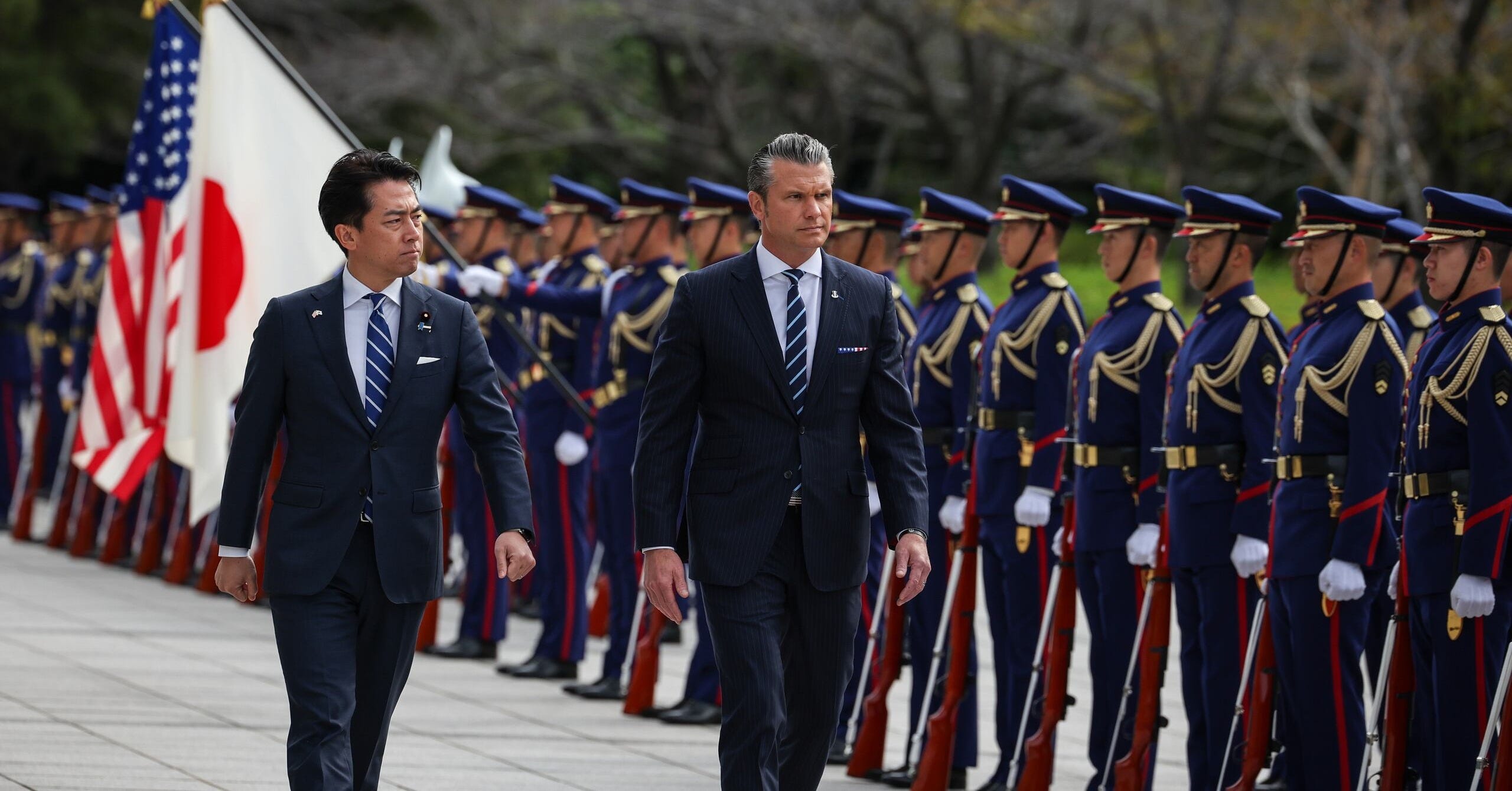
For months, Beijing has run the same script against Tokyo. Brand Prime Minister Sanae Takaichi as a regional risk. Recycle “new militarism” and “remilitarization” through every Foreign Ministry podium. Try, at the May Beijing summit, to talk Japan down to a U.S. president behind closed doors.
On Saturday, May 30, in Singapore, the answer arrived — and it wasn’t rhetorical.
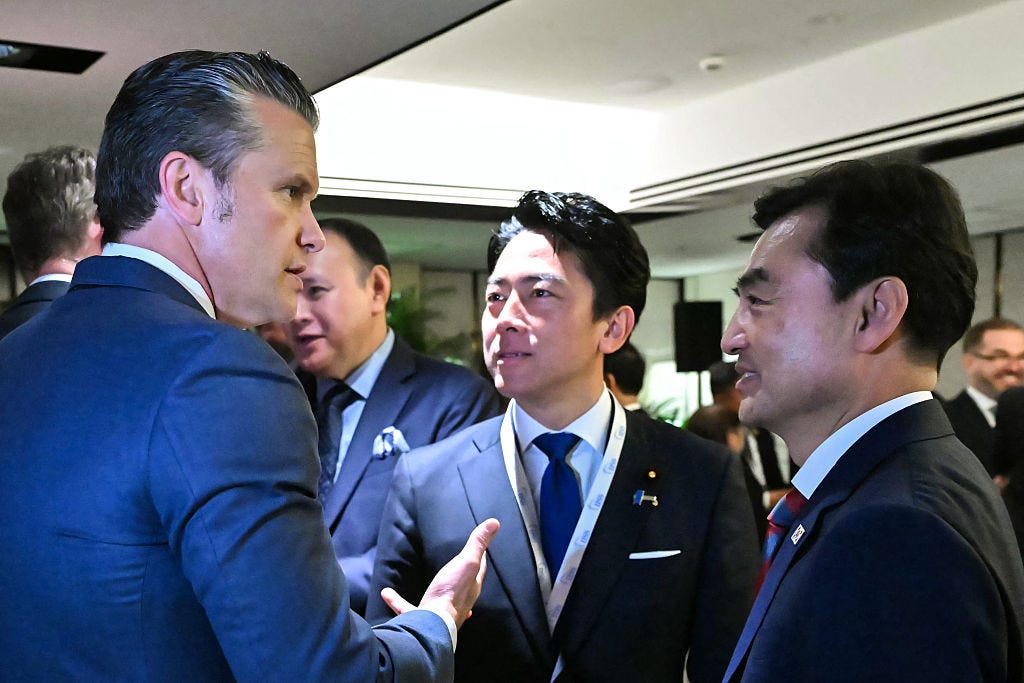
Secretary of War Pete Hegseth and Japan’s Defense Minister Shinjiro Koizumi met on the sidelines of the Shangri-La Dialogue and endorsed the upcoming temporary deployment of U.S. ground-based missile capabilities to a Japan Self-Defense Forces base, agreed to enhance flexible air dispersal access and practice, and committed to advance bilateral presence in the Southwest Islands. They also affirmed the importance of continuing concrete, tangible trilateral cooperation with Australia and lauded the establishment of a trilateral air and missile defense data sharing framework among the three countries.
Missiles. Bases. The Southwest Islands. Live data-sharing with Canberra. In one afternoon, Tokyo and Washington moved from communiqué-speak into hardware, geography, and a kill chain.
Operation Supercharge
The line that will travel furthest in Beijing is Koizumi’s.
Minister Koizumi proposed “Operation Supercharge”, an initiative to further accelerate bilateral efforts including the co-development and co-production of missiles, such as SM-3 Block IIA and AMRAAM — and Hegseth, by both governments’ accounts, took it seriously.