

When a country’s banks start closing offices, that is not market noise. That is a verdict.
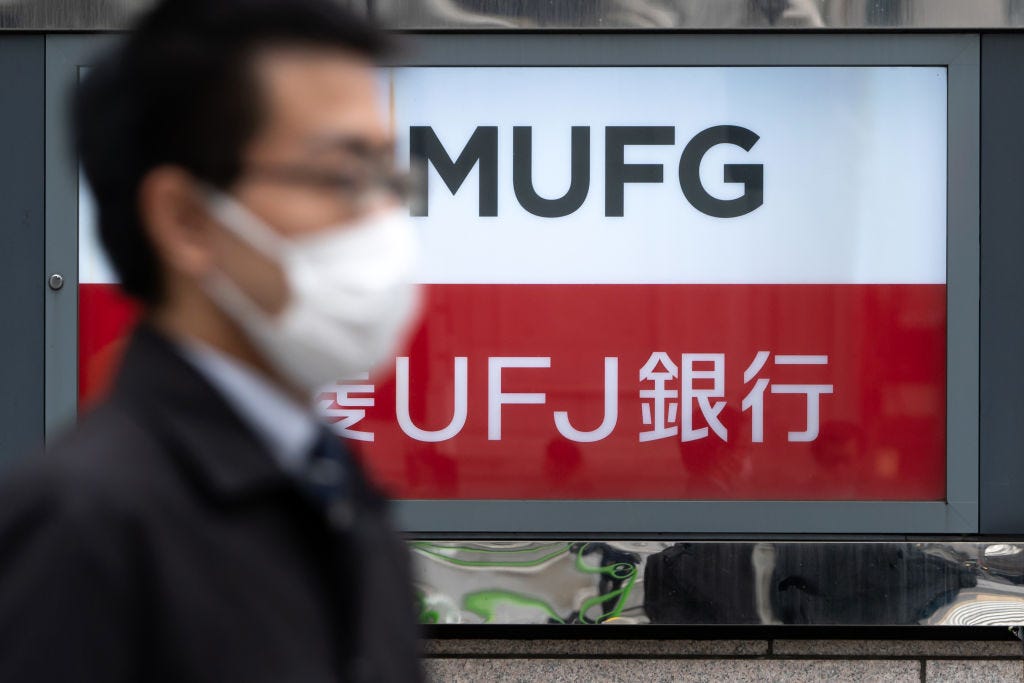
Over the past five years, the number of offices, branches, and local subsidiaries operated by Japan’s 61 regional banks inside China has fallen from 50 to 40, a 20% contraction. At the megabank level the numbers are starker. Five-year China lending by Sumitomo Mitsui Banking Corporation is down roughly 40% from a $51.9 billion baseline. MUFG Bank is down about 20% from a 3.5 trillion yen base. Mizuho Bank’s China lending, including local subsidiaries, has fallen by more than 30%. Aggregate China lending by Japan’s three largest banks has dropped from roughly 9 trillion yen in fiscal 2021 to about 6 trillion yen in fiscal 2026.
The figures come from a Nikkei investigation published June 3, drawing on the Regional Banks Association of Japan and individual bank earnings releases. The reporting is sober, dated, and sourced. The story underneath it is not.
The Closures Tell You What the Boardrooms Won’t
The press releases are written in the neutral language banks always use when they retreat: “consolidation,” “customer needs declining,” “maintenance costs rising.” Read the closures themselves.
Hokkaido Bank shut its Shenyang office in May 2025 after 19 years on the ground, pulling the work back to Japan. Bank of Kyoto closed its Dalian office in 2025 and folded what was left into Shanghai. These are not branch optimizations. These are exits from cities where Japanese auto-parts suppliers and small and mid-sized manufacturers once needed Japanese banking partners to navigate Chinese tax law, regulatory thickets, and joint-venture structures — the value proposition that justified regional bank entry in the first place.
When the value proposition collapses, two things have to have happened. Japanese clients have to be leaving. And the environment has to have gotten worse for the ones still there.
Both have happened. And both trace back to choices made in Beijing.
