

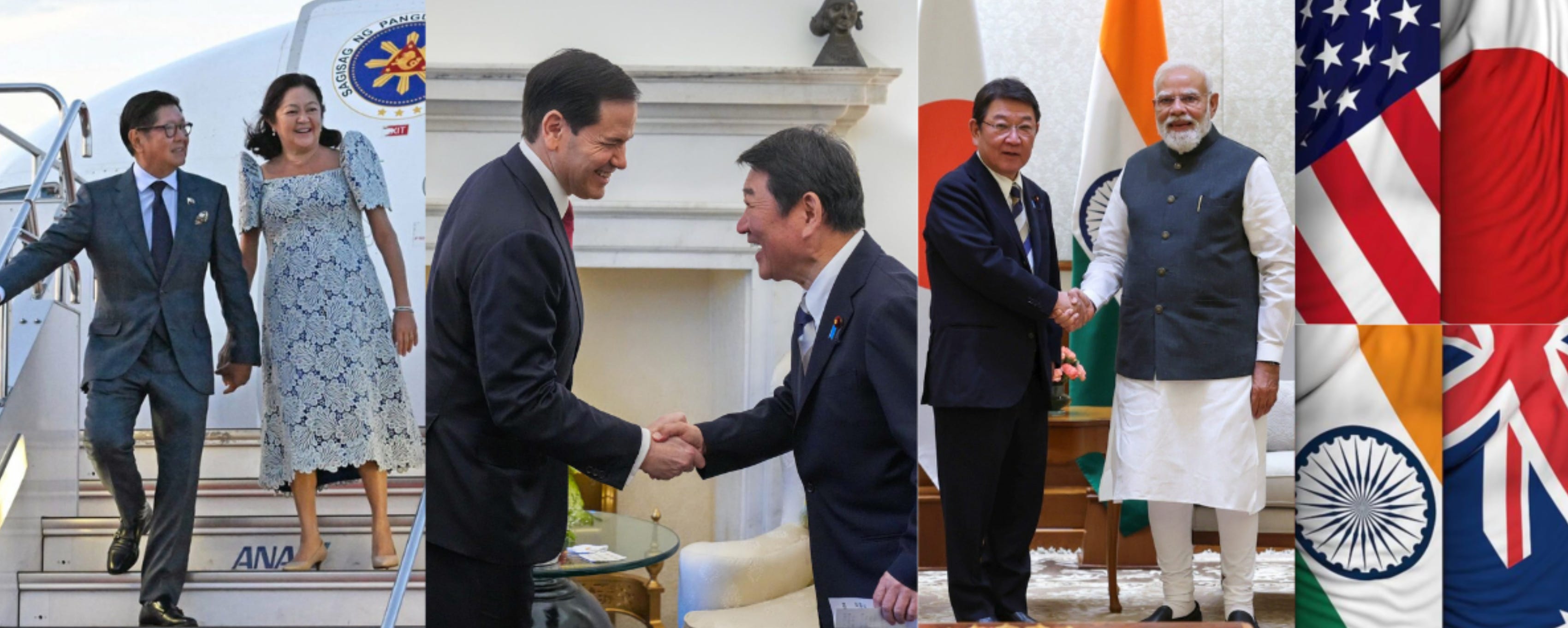
Marcos landed in Tokyo. Rubio, Wong, Motegi, and Jaishankar met in New Delhi. Then Rubio and Motegi met bilaterally. Then Rubio and Jaishankar signed a critical minerals framework. All on the same day. All within 48 hours of the leak that exposed Xi’s failed ambush in Beijing.
No signal in geopolitics is ever accidental. This one tells a story.
Let me lay out the timeline. Because when you put the dates in order, the story tells itself.
May 14–15. Trump and Xi meet in Beijing. Inside the room, Xi raises his voice, goes after Sanae Takaichi by name, and asks Trump to stop supporting her. Trump refuses. He defends Takaichi. He defends Japan’s defense buildup. He cites North Korea. The ambush fails.
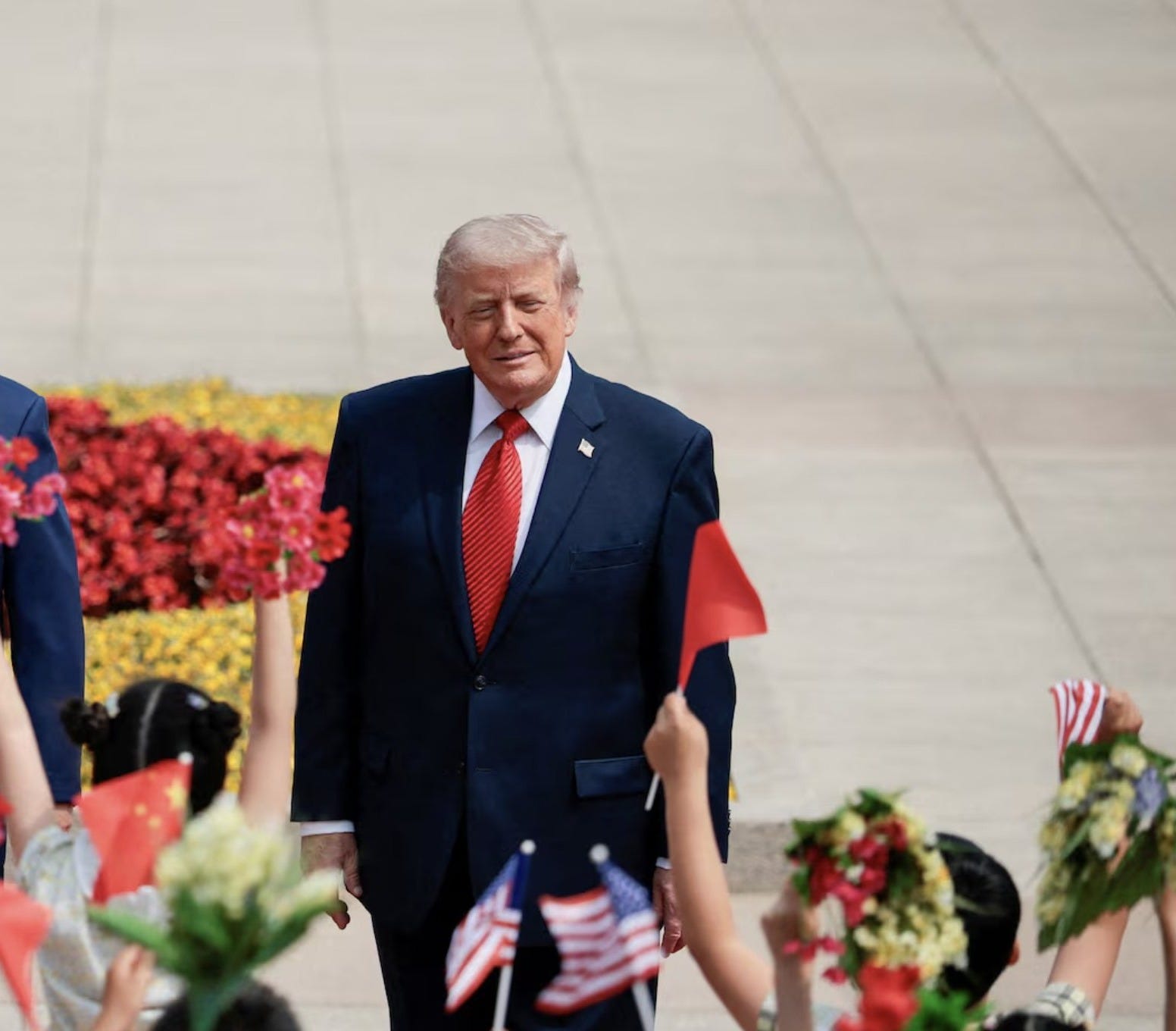
May 24. Yomiuri Shimbun, sourced to Japanese government officials, breaks the story. The FT, Bloomberg, and Japan Times follow within hours.
May 25. MFA spokeswoman Mao Ning steps to the podium in Beijing trying to put out the fire — and instead lights a bigger one. She publicly accuses Japan, a non-nuclear NPT state since 1976, of pursuing nuclear weapons. She uses that fabricated charge to justify months of rare-earth export coercion against Tokyo. The self-incrimination is global within hours.
May 26. Forty-eight hours after the leak landed, four things happen — coordinated across two capitals, executed within a single morning.
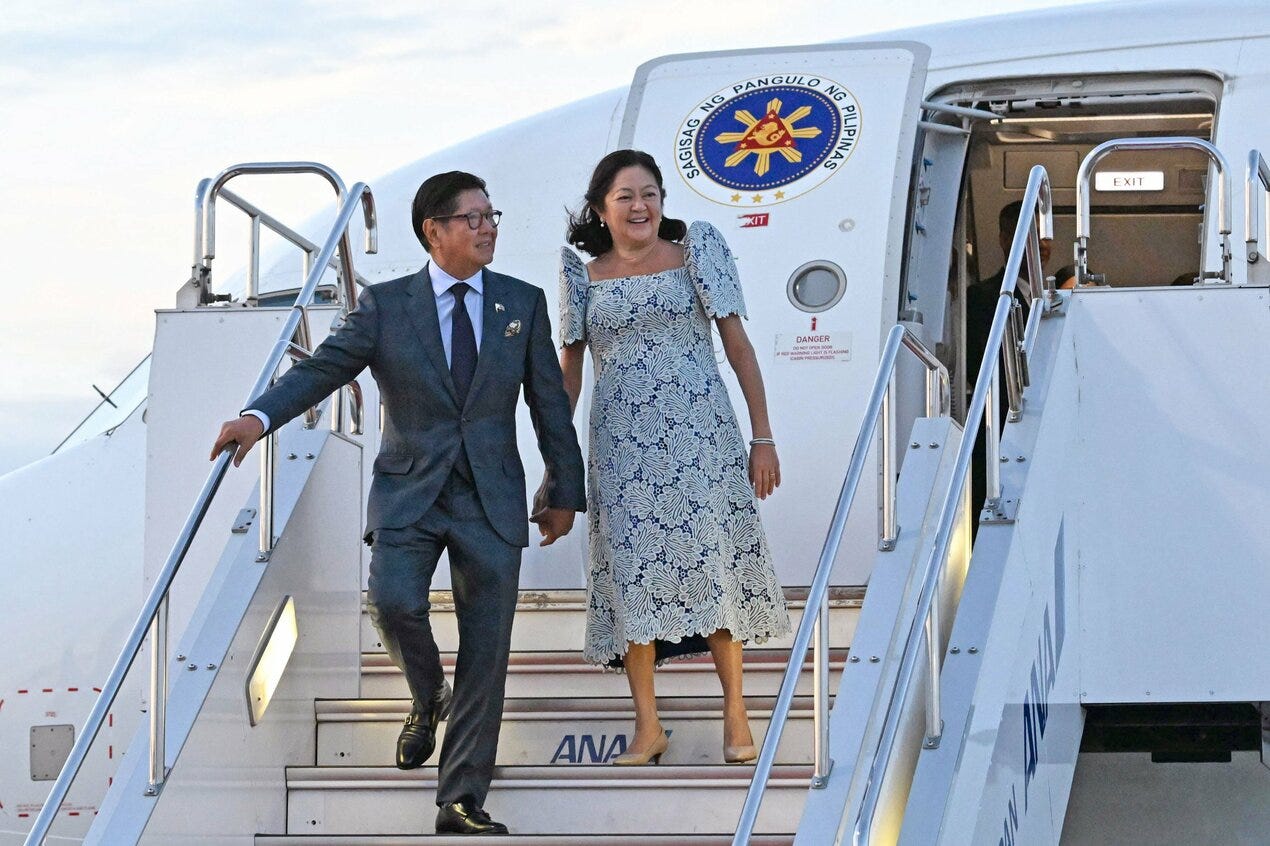
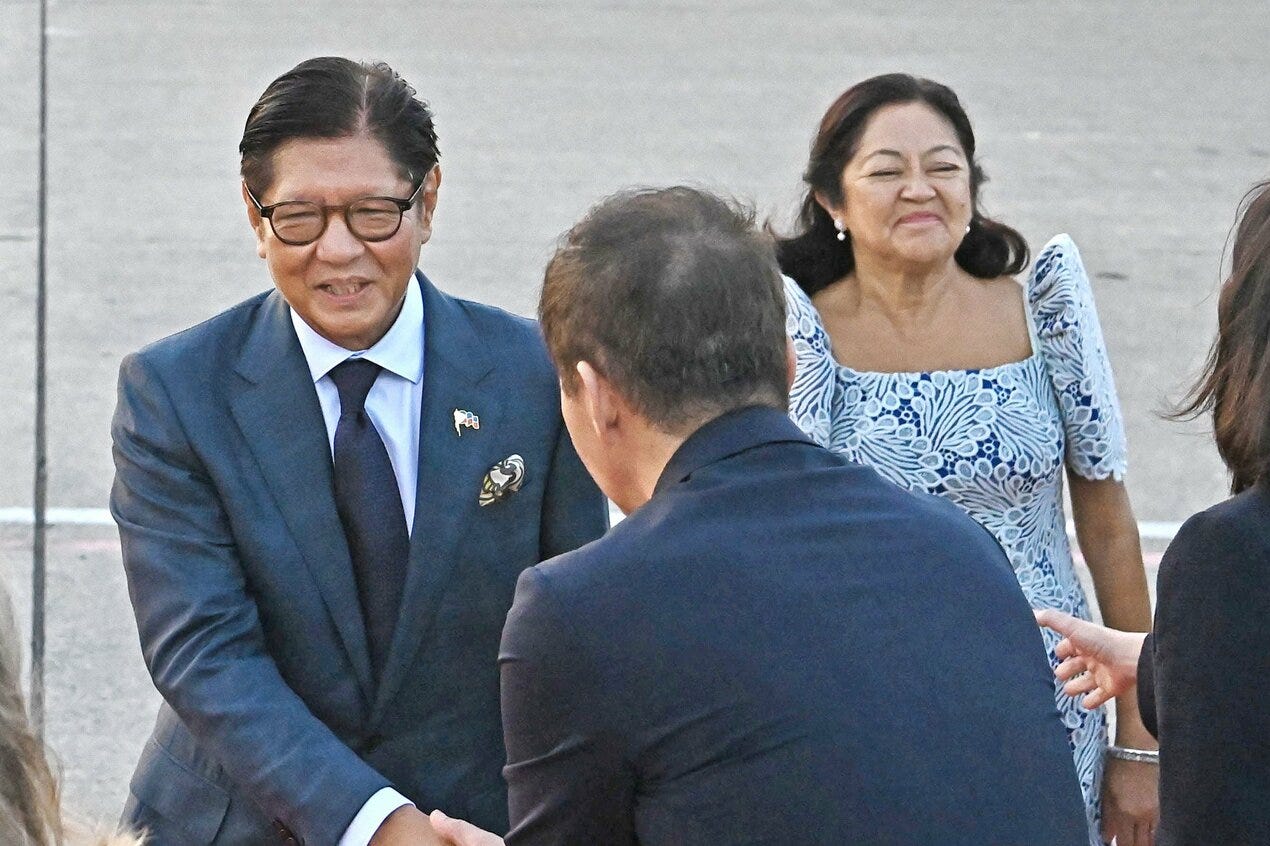
In Tokyo, Philippine President Ferdinand Marcos Jr. lands for a state visit — the first state visit by a Philippine president to Japan in nearly 11 years. He goes directly into talks with Sanae Takaichi.
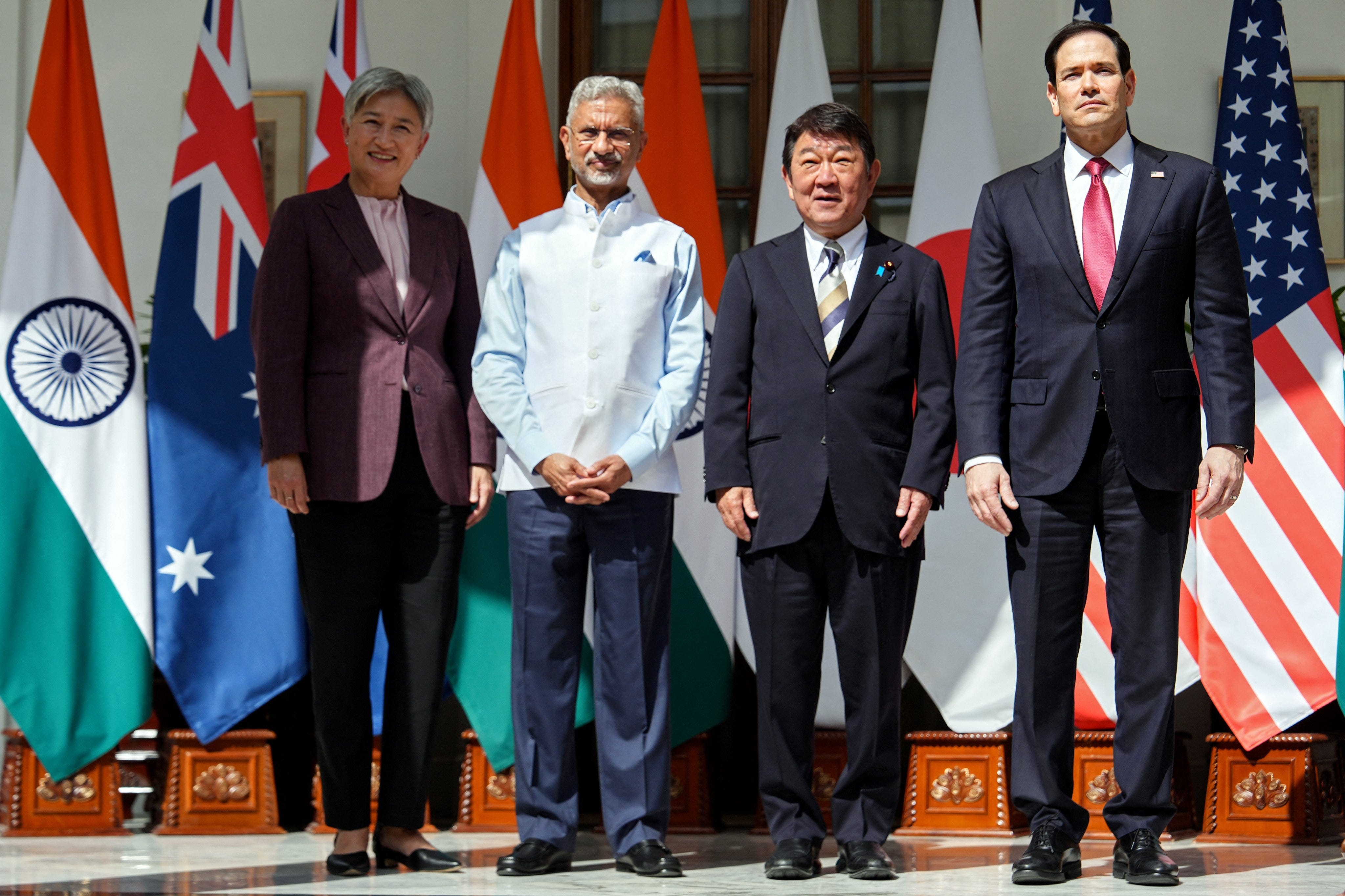
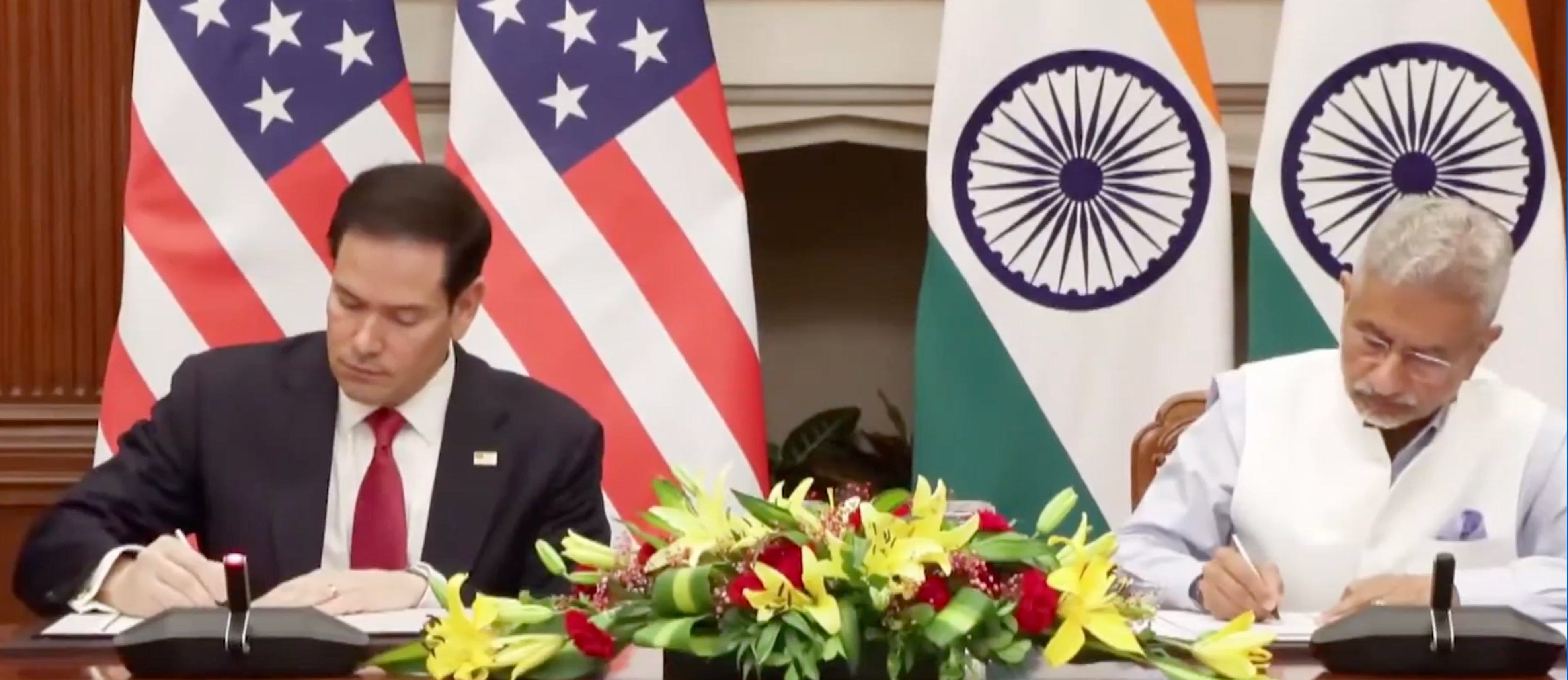
In New Delhi, U.S. Secretary of State Marco Rubio, Japanese Foreign Minister Toshimitsu Motegi, Australian Foreign Minister Penny Wong, and Indian External Affairs Minister S. Jaishankar convene the 11th Quad Foreign Ministers' Meeting — and announce the most concrete package of deliverables the Quad has produced in its history.
On the sidelines of that meeting, Rubio and Motegi hold a bilateral Japan-U.S. Foreign Ministers’ Meeting. The Japanese MOFA readout is unusually direct: the two ministers exchanged views on China “following President Trump’s latest visit to China” — and “reaffirmed the importance of peace and stability across the Taiwan Strait.”
Also on the sidelines, Rubio and Jaishankar sign a bilateral U.S.-India Critical Minerals Framework, covering mining, processing, recycling, and investment across the entire rare-earth supply chain.
This is not a coincidence on a calendar. This is choreography.
Manila Flies to Tokyo
Why now? Why this particular week, after nearly 11 years of no Philippine state visit to Tokyo — the last one being Benigno Aquino III’s in June 2015?
Read Marcos’s own departure statement. He listed the agenda himself, with no diplomatic camouflage: the West Philippine Sea, defense and security, maritime cooperation, energy, cooperation with the United States, and ASEAN. Every single item points at one country.
The visit’s substantive purpose is to operationalize two agreements already signed:
The Japan-Philippines Reciprocal Access Agreement (RAA), signed on July 8, 2024, which entered into force on September 11, 2025 — the first legal framework since World War II to allow Japan’s Self-Defense Forces to formally deploy on Philippine soil
The Acquisition and Cross-Servicing Agreement (ACSA), signed on January 15, 2026, providing the framework for Japanese and Philippine forces to exchange food, fuel, medical supplies, and logistical services
In plain English: this visit is about turning signed paper into running machinery.
Now look at the map. Japan anchors the northern segment of the First Island Chain. The Philippines anchors the southern segment. Taiwan sits between them. When Japan and the Philippines integrate their militaries — legally, logistically, operationally — the chain closes. The narrow corridors through which the PLA Navy must transit to project force into the open Pacific just got narrower.
Two days after Tokyo leaked Xi’s attempt to drive a wedge between Washington and Tokyo, Manila flew to Tokyo to deepen the alliance Xi just attacked.
That is not a coincidence either.
The Quad: The Time Window for Acting Is Now
For years, Beijing’s propaganda apparatus mocked the Quad as a paper tiger — “an empty shell,” “Asian NATO that doesn’t actually do anything.” There was, until recently, some truth to the jab. The Quad had been long on dialogue, short on deliverables.
The New Delhi meeting may be the moment that critique stops being true.
Look at what the four ministers actually announced — and read it through the lens of which Chinese coercion tool each item dismantles:
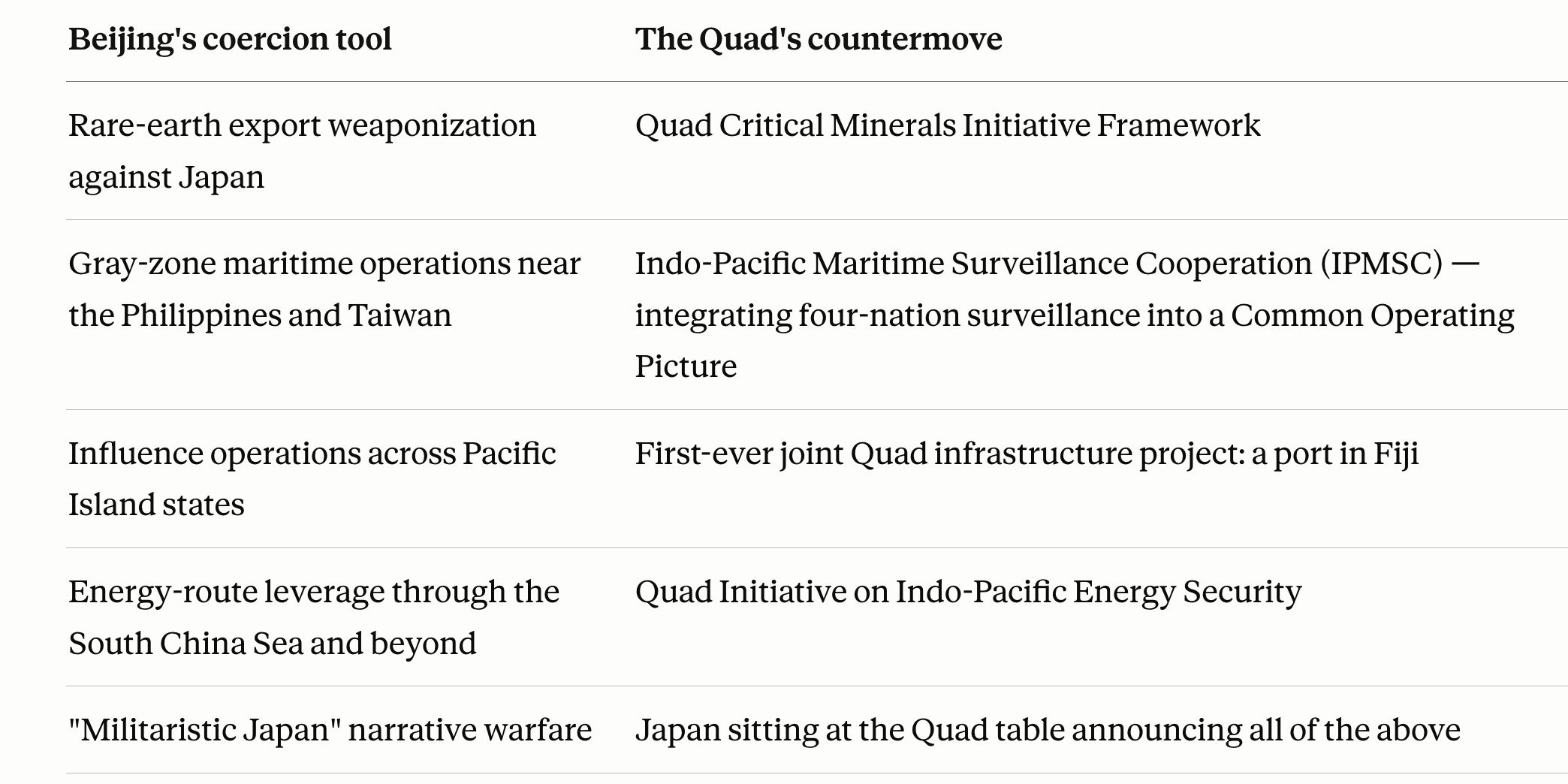
Notice something? Each Quad deliverable corresponds, point for point, to a specific coercion lever Beijing has been pulling against Japan, the Philippines, Taiwan, and the broader region over the past six months.
A package this precisely calibrated cannot be improvised in 48 hours. It has been in the diplomatic pipeline for months. What the Beijing summit, the leaked exchange, and the Mao Ning self-incrimination did was supply the political moment to launch it.
Rubio said it explicitly on the way in: “We want the Quad to be more than a semi-annual forum.”
Translation: the time window for talking about China is closing. The time window for acting is now.
Taiwan, On the Record
This is the move most headlines missed entirely. It is also the most diplomatically precise.
On the same morning the Quad announced its deliverables, Rubio and Motegi held a bilateral Japan-U.S. Foreign Ministers’ Meeting. The Japanese MOFA’s official readout uses language that, in diplomatic terms, is the equivalent of a flare:
The two ministers exchanged views on China-related issues “following President Trump’s latest visit to China.“ They confirmed close coordination. And — this is the sentence that matters — they “reaffirmed the importance of peace and stability across the Taiwan Strait.“
Read it again. Slowly.
Less than two weeks after Xi Jinping told Trump, in person, that Takaichi and Lai Ching-te jointly constitute a “threat to regional peace” — the United States Secretary of State and the Japanese Foreign Minister stood up together in a third country and publicly reaffirmed the Taiwan Strait formula Xi was trying to dismantle.
This is the public version of the answer Trump gave in private. And it is now on the official record. Posted on the Japanese Foreign Ministry’s website. Citable by every embassy and every analyst in Asia.
Beijing cannot pretend this did not happen. It cannot claim the readout is fake news. The MOFA URL is permanent and time-stamped.
The leaked private exchange of May 24 has just become the public diplomatic policy of May 26. Within 48 hours. With explicit reference to the Beijing summit itself.
That sequencing is not accidental. It is the diplomatic equivalent of a victory lap performed quietly, in protocol-perfect language, in front of the camera.
Where It Really Hurts: Rare Earths
While Rubio and Motegi were reaffirming Taiwan in one room, Rubio and Jaishankar were in another room signing a bilateral U.S.-India Critical Minerals Framework. Mining. Processing. Recycling. Investment. The full supply chain.
This is the move that has the highest direct material consequence for Beijing.
China accounts for roughly 70 percent of global rare-earth mining and nearly 90 percent of global processing capacity. That dominance is the single most powerful coercion tool the PRC has against the developed democracies — and Beijing has been using it. The freeze on heavy rare-earth and dual-use exports to Japan, which Mao Ning openly defended on May 25, is one direct application. Earlier export controls during the U.S.-China trade fight were others.
Now stack what just happened on May 26:
The Quad as a four-nation grouping announced a Critical Minerals Initiative Framework
The United States and India bilaterally signed a parallel framework on the same day
Both are explicitly designed to build supply chains that route around Chinese processing
This is what redundancy in strategic architecture looks like. Multiple overlapping arrangements, each capable of functioning on its own, all converging on the same goal: ending the Chinese monopoly on the materials that power semiconductors, defense systems, electric vehicles, and clean energy.
And — here is the part Beijing will find hardest to spin — India signed it.
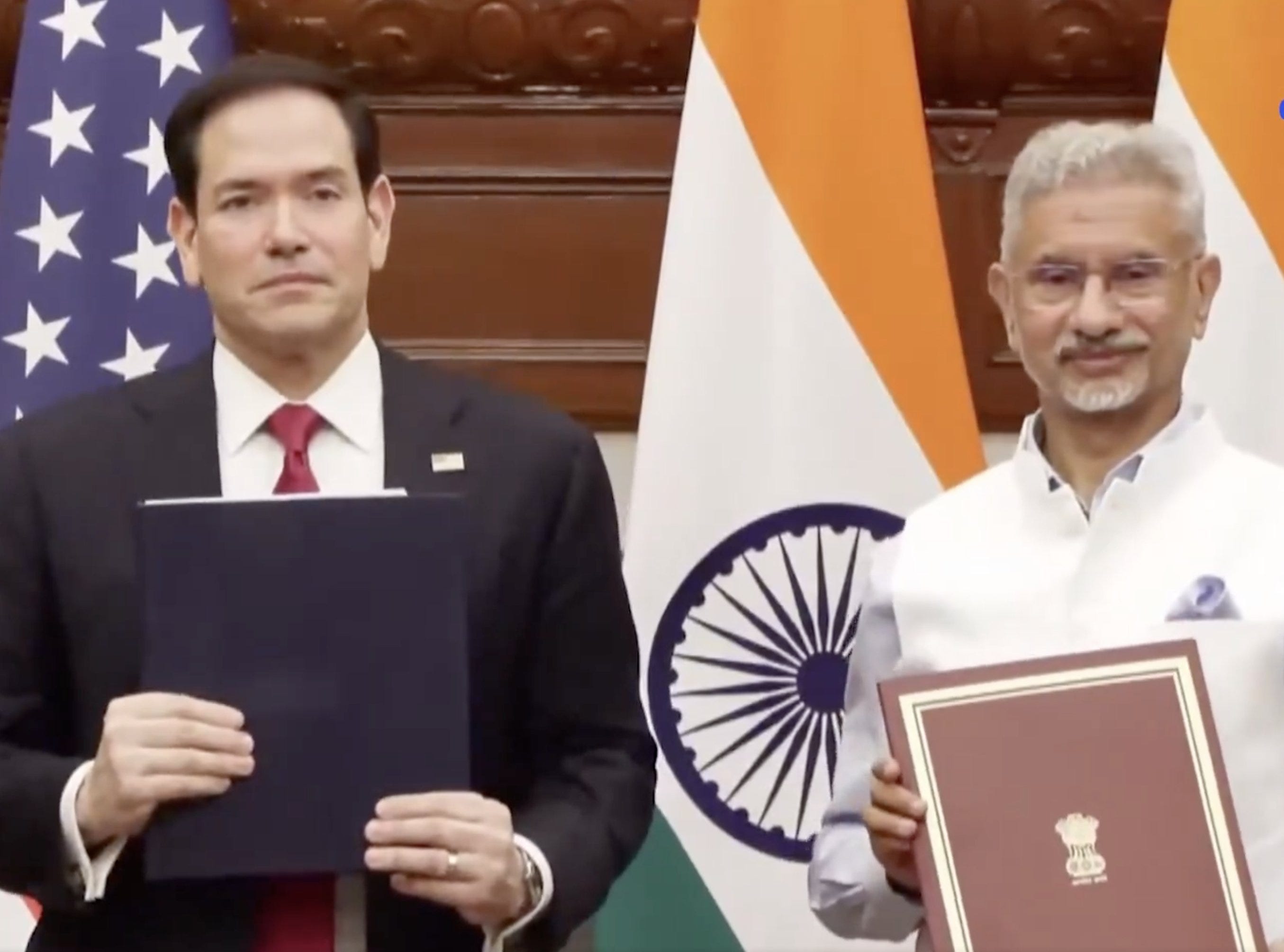
For years, Chinese strategists banked on the assumption that India’s strategic autonomy, its historical hedging instincts, and its frictions with Washington would keep New Delhi at arm’s length from any genuine Indo-Pacific containment architecture. The bilateral framework signed on May 26 — initialed by an Indian foreign minister standing next to a Republican U.S. Secretary of State on Indian soil — should put that assumption to rest.
The Quad just stopped being a forum where India shows up to look polite. It started being a forum where India actively signs binding economic-security architecture with the United States.
Read the Geometry
Now look at the most underread detail of this entire week.
The Japanese foreign minister was in New Delhi on the same day his country was hosting a Philippine state visit to Tokyo. In standard diplomatic protocol, that does not happen by accident. A host country does not let its foreign minister leave the capital during an incoming head of state’s official visit — unless the absence itself is part of the choreography.
It was.
The geometry that produces this picture cannot be coincidence:
Tokyo: Japan and the Philippines deepening bilateral defense integration — closing the First Island Chain
New Delhi, Quad table: Japan and three other democracies announcing structural countermeasures across maritime surveillance, critical minerals, energy security, and Pacific infrastructure
New Delhi, bilateral with Rubio: Japan and the United States publicly reaffirming the Taiwan Strait formula Xi tried to dismantle
New Delhi, U.S.-India bilateral: Washington and New Delhi signing the supply-chain framework that targets Beijing’s most powerful coercion tool
Same morning
Forty-eight hours after the leak landed in Asia’s morning papers, exposing what Xi had tried — and failed — to do in Beijing
11 days after the Trump-Xi summit
The democracies are not just answering Xi’s Beijing ambush. They are answering it four times, in two capitals, on the same morning.
The Trap Beijing Walked Into
Step back. Look at the entire board.
For six months, the People’s Republic of China has been running an escalating coercion campaign against Sanae Takaichi’s government. Severed-neck threats on consul-general social media. Seafood bans. Tourism advisories. Rare-earth export freezes. Wang Yi invoking Pearl Harbor at Munich. Mao Ning inventing a Japanese nuclear weapons program. And finally, Xi Jinping in his own house, raising his voice at the American president in a personal effort to make Takaichi a political problem for Trump.
The strategic theory behind all of this is identifiable. It is the standard Chinese coercion playbook: escalate hard, escalate fast, escalate at multiple levels simultaneously, until the target government cracks and its allies disengage.
The theory rests on one critical assumption: that the target coalition is fragile.
That assumption has now been falsified — in public — four times in a single morning.
Trump did not crack in the room. Marcos did not skip the Tokyo trip. The Quad did not water down its deliverables. Rubio and Motegi went out of their way to put Taiwan Strait language on the public record. Jaishankar signed a bilateral critical minerals framework with Washington. The coalition not only held — it tightened, deepened, diversified, and produced concrete output across exactly the dimensions Beijing has been trying to attack.
There is a name for this in strategic studies: the reverse security dilemma. When a rising power’s coercion crosses a certain threshold, it stops fragmenting the opposing coalition and starts welding it together. The Soviet Berlin Blockade did not break Western Europe — it produced NATO. North Korea’s invasion of the South did not isolate Japan — it produced the U.S.-Japan alliance. Russia’s invasion of Ukraine did not split NATO — it expanded NATO to Finland and Sweden.
Beijing’s 2025–2026 coercion campaign against Japan is now producing the next iteration of that pattern in the Indo-Pacific. Every escalation has called forth a deeper, broader, more institutionally specific countermeasure. The architecture being put in place this week is structural — RAA, ACSA, IPMSC, Quad Critical Minerals Initiative Framework, U.S.-India bilateral framework, the Fiji port, public Taiwan Strait reaffirmation, the closed First Island Chain. None of it unwinds. Even if Beijing pivoted to charm tomorrow, the architecture being built this week will outlast that pivot by years.
This is the trap of strategic overreach. The harder Beijing pushes, the faster its adversaries integrate.
So What Happens Next
Honest analysts resist the temptation to declare things settled. Let me give you my read, with appropriate humility.
Short term (weeks): Beijing’s propaganda machine will frame all four moves as “American-instigated anti-China conspiracy.” That framing is going to find a thinner and thinner audience in the region, because the visible facts — Manila showed up, the Quad delivered, the U.S. and Japan publicly reaffirmed Taiwan Strait stability, the U.S. and India signed binding critical-minerals architecture — speak louder than any Global Times op-ed. Expect Beijing to vent through Taiwan Strait military pressure. Expect the nuclear-weapons fiction from the Mao Ning podium to quietly disappear; it has become a liability.
Medium term (months): Watch the Quad leaders’ summit Rubio has flagged for later this year. If the four heads of state ratify and institutionalize what their foreign ministers built in New Delhi, the Quad’s transition from forum to coalition becomes irreversible. Watch the RAA implementation between Japan and the Philippines — particularly any move toward routinized Japanese Self-Defense Force rotations through Philippine bases. Watch the U.S.-India critical minerals framework start to generate actual investment flows; if it produces a working processing facility outside Chinese territory within twelve months, the rare-earth coercion tool starts to lose its edge. Watch how the U.S.-Japan-Korea trilateral and the Quad start to interlink. The architecture is being built in modular pieces; the pieces are starting to connect.
Longer (within a year): The deterrence architecture around the Taiwan Strait is shifting from a U.S.-Japan bilateral structure to a U.S.-Japan-Philippines trilateral — and from there, potentially, to a fully four-cornered structure incorporating Australia and India in the economic-security layer. If Beijing continues to respond to this with coercion rather than recalibration, the integration accelerates. This is the strategic trap China has walked into. It cannot stop pushing without losing face domestically; it cannot keep pushing without further consolidating the architecture being built to contain it.
You Just Had to Look
In high-stakes geopolitics — especially when one of the principal actors runs the largest information-warfare apparatus in the world — no signal is ever accidental.
The date Marcos landed in Tokyo was not random. The date the Quad announced its deliverables was not random. The decision to put the Japanese foreign minister in New Delhi while his prime minister was hosting the Philippine president in Tokyo was not random. The decision to put the Taiwan Strait formula into the public MOFA readout — explicitly tied to “President Trump’s latest visit to China” — was not random. The decision to sign the U.S.-India critical minerals framework on the same day, in the same city, was not random. The timing of all of it relative to the Beijing summit leak was not random.
Xi Jinping walked into that room on May 14 expecting to extract a concession from Trump that would crack the alliance system arrayed against China. He walked out with the political moment that his adversaries needed to launch the most coordinated week of Indo-Pacific democratic integration in years.
The ambush failed. The leak landed. The architecture moved.
Four moves. Two capitals. One morning.
And anyone reading the signals — really reading them, not just consuming the headlines — already knew it was going to.
Read it. Share it. Question it. The fog only clears when more people are willing to look carefully.
────────────────────────────
Original article by me @aricchen. Views are my own — welcome to discuss! All figures and dates have been cross-verified across multiple independent sources.
© 2026 Aric Chen. All rights reserved. Any unauthorized use will be reported under the DMCA.